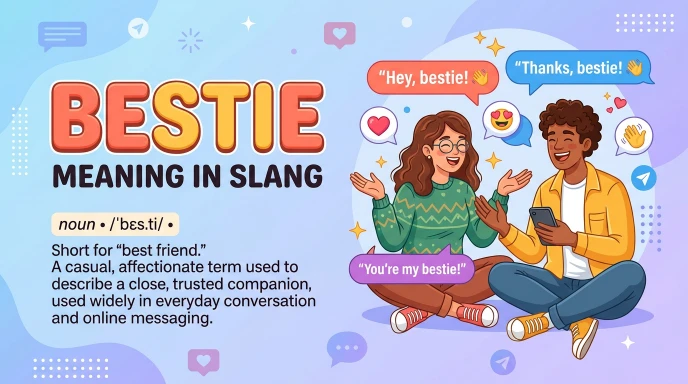
The Bestie Meaning in Slang word “bestie” means “best friend” and describes someone you feel especially close to. People commonly use it in text messages, TikTok comments, Instagram captions, Snapchat conversations, and everyday speech to show friendship, affection, or a playful connection.
You might see someone comment “Hey, bestie!” on a friend’s photo or text, “Good morning, bestie!” to someone they care about. The word sounds warm, casual, and friendly.
However, people do not always use “bestie” for their actual closest friend. Sometimes, they use it jokingly with acquaintances, online friends, or even strangers to create a friendly tone.
Quick Answer of Bestie Meaning in Slang
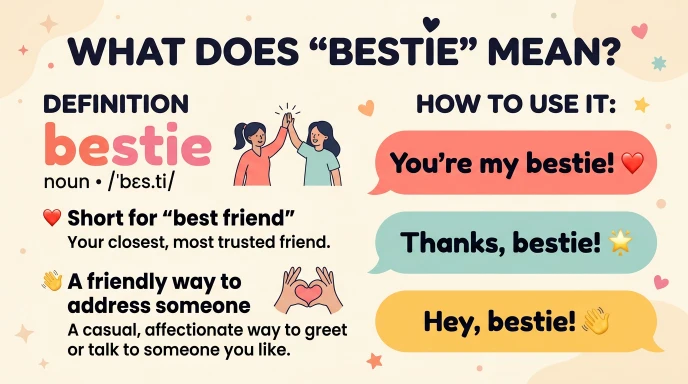
Bestie means “best friend” in slang. It is an informal, affectionate word for someone you are close to. People also use it as a playful way to address friends, followers, or other people online.
Example:
- “You’re my bestie!” = “You’re my best friend!”
- “Thanks, bestie!” = A friendly way to say thank you.
- “Bestie, what are you doing?” = A casual way to get someone’s attention.
The exact meaning depends on the relationship and the tone of the conversation.
What Does Bestie Mean in Texting?
In texting, bestie is a short, casual way to say best friend. It makes a message sound more personal, affectionate, and relaxed.
Friends often use it when sharing exciting news, asking for advice, giving compliments, or simply starting a conversation.
For example:
Person A: “I finally passed my exam!”
Person B: “Yesss, bestie! I’m so proud of you!”
Here, “bestie” shows excitement and affection.
People also use the word when they want to sound friendly without writing a long greeting.
Examples include:
- “Hey bestie, are you free today?”
- “Goodnight, bestie. Talk tomorrow!”
- “Bestie, I need your advice.”
- “You’re the best, bestie!”
- “OMG bestie, you won’t believe what happened.”
In these messages, the word adds warmth and makes the conversation feel more casual.
Does Bestie Always Mean Your Closest Friend?
No. Bestie does not always mean someone is literally your closest friend.
Some people reserve the word for a person they trust deeply. Others use it casually with several friends or people they interact with online.
For example, someone might call a classmate “bestie” even if they only talk occasionally. Another person might use the word with a stranger in a comment to sound welcoming.
Context helps you understand if the person means it seriously or playfully.
What Does Bestie Mean on TikTok?
On TikTok, bestie is often used to address someone in a friendly, playful, or relatable way. You may see it in video comments, captions, replies, and conversations between creators and followers.
The word can express genuine friendship, but it can also make an online interaction feel more personal.
Common TikTok examples include:
- “Bestie, you need to hear this.”
- “Not you doing this again, bestie!”
- “Bestie, respectfully, what is this?”
- “We need to talk, bestie.”
- “Bestie understood the assignment.”
Depending on the situation, these phrases can sound supportive, humorous, teasing, or dramatic.
For example, if someone posts a funny video of a cooking mistake, a viewer might comment, “Bestie, what happened here?” The comment may be teasing the creator in a friendly way rather than criticizing them seriously.
Creators may also call their followers “besties” to build a sense of community. In this case, the word does not mean every follower is a personal best friend.
What Does Bestie Mean on Instagram?
On Instagram, people commonly use bestie in comments, direct messages, Stories, and captions to show affection or appreciation.
It often appears under selfies, birthday posts, vacation pictures, and other personal updates.
Examples:
- “Looking gorgeous, bestie!”
- “My bestie for life.”
- “Love you, bestie!”
- “That’s my bestie right there.”
- “Bestie appreciation post.”
- “You deserve the world, bestie.”
The meaning can change slightly depending on the context.
If someone comments “Looking gorgeous, bestie!” under a friend’s photo, they are giving a friendly compliment. If they post “My bestie for life” alongside a picture of a close friend, they are expressing a stronger personal connection.
People also use “bestie” with online mutuals or creators they admire. This usage is usually casual and does not necessarily indicate a real-life friendship.
What Does Bestie Mean on Snapchat?
On Snapchat, bestie usually refers to a close friend, especially in everyday chats and Snaps.
Someone might use the word when sending pictures, sharing updates, making plans, or talking about personal matters.
For example:
- “Bestie, look at this!”
- “Come over later, bestie.”
- “I have tea to spill, bestie.”
- “Miss you, bestie!”
- “Bestie, send me the pictures.”
These examples show how the word makes a message feel friendly and informal.
One important distinction: Snapchat also has its own friendship indicators and emojis. The slang word “bestie” and Snapchat’s official friend labels are not necessarily the same thing. The word in a message is simply how someone addresses another person, while an app indicator follows Snapchat’s own rules.
Is Bestie a Romantic Word or Just a Friendship Word?
Bestie is usually a friendship word, not a romantic term. However, the relationship between the people using it can affect how it sounds.
Most of the time, it refers to a close friend, a trusted person, or someone the speaker likes spending time with.
For example:
“My bestie knows everything about me.”
This normally describes a close friendship.
However, some couples use “bestie” with each other because they consider their partner their best friend, too. In that situation, the word can express affection within a romantic relationship.
It can also appear in playful online conversations where the speaker does not intend romance at all.
Can Someone Call Their Crush Bestie?
Yes. Someone can call their crush “bestie,” but the word alone does not reveal romantic feelings.
They might be using it because they are friends, because they feel shy about showing affection, or simply because it is part of their normal way of speaking.
Do not assume someone likes you romantically just because they call you bestie. Look at the overall conversation and how they treat you instead.
What Does Bestie Mean When Someone Calls You Bestie?
If someone calls you “bestie,” they are usually trying to sound friendly, affectionate, or comfortable around you.
However, the meaning depends on who says it and how they use it.
Here are some common possibilities.
1. They Consider You a Close Friend
If a longtime friend calls you bestie, they may genuinely see you as one of their closest friends.
Example:
“You’ve always been there for me, bestie.”
This suggests trust, appreciation, and a strong friendship.
2. They Are Being Friendly
An acquaintance might call you bestie simply to make the conversation feel warmer.
Example:
“Thank you for helping me, bestie!”
They may not mean that you are their actual best friend. They are just using a friendly expression.
3. They Are Joking With You
Friends sometimes use the word sarcastically or dramatically to make a joke more entertaining.
Example:
“Bestie, you are making absolutely no sense.”
Depending on the tone, this could be affectionate teasing rather than a serious complaint.
4. They Use It With Everyone
Some people call nearly everyone “bestie,” including classmates, coworkers, followers, and strangers online.
If someone regularly uses the word with many people, it may simply be part of their communication style.
The safest interpretation is that “bestie” signals friendliness, but it does not automatically prove a deep friendship or romantic interest.
Bestie Meaning in Different Contexts
The word “bestie” generally relates to friendship, but its tone can vary from one situation to another.
| Context | Meaning | Example |
| Texting | Close or friendly companion | “Hey, bestie!” |
| TikTok | Friendly or playful address | “Bestie, listen to this.” |
| Affection or appreciation | “Love you, bestie!” | |
| Snapchat | Friend or close companion | “What’s up, bestie?” |
| Romantic relationship | Partner who is also a close friend | “My partner is my bestie.” |
| Sarcastic conversation | Playful teasing or mock frustration | “Bestie, be serious.” |
| Online community | Friendly way to address followers | “Thanks for watching, besties!” |
The same word can sound sincere, funny, affectionate, or sarcastic. The surrounding words and the relationship between the people usually make the meaning clear.
Bestie vs. Best Friend: What’s the Difference?
“Bestie” and “best friend” have almost the same basic meaning. Both describe someone who is especially close to you.
The main difference is the tone.
Bestie sounds more casual, playful, and affectionate, while “best friend” can sound more neutral or direct.
Compare these examples:
- “She is my best friend.” This sounds straightforward.
- “She’s my bestie!” This sounds more casual and expressive.
- “Thanks for helping me, bestie!” This feels friendly and warm.
- “My best friend has known me since childhood.” This emphasizes the relationship.
People often use “bestie” in informal conversations, while “best friend” works in both casual and more formal situations.
Neither expression is automatically more meaningful than the other. A person can use “bestie” for a lifelong friend or use “best friend” to describe the exact same relationship.
Bestie vs. Besties: What Is the Difference?
Bestie is singular, while besties is plural.
Use “bestie” when talking to or about one person. Use “besties” when referring to two or more friends.
Examples:
- “She’s my bestie.” One friend.
- “Hey, bestie!” Addressing one person.
- “They’re my besties.” More than one friend.
- “Good morning, besties!” Addressing a group.
- “Me and my besties went shopping.” Referring to several friends.
Online creators may also use “besties” to address their audience as a group. It creates a warm, informal feeling without meaning every viewer is personally close to them.
Is Bestie Gen Z Slang?
“Bestie” is widely used by Gen Z and across social media, but it is not exclusive to Gen Z.
The word comes from shortening “best friend” and has been used beyond today’s social media culture. Younger internet users have helped make it especially visible in comments, memes, captions, and casual online conversations.
People of different ages can use the word naturally, depending on their social circles and communication styles.
Its popularity online also reflects how people use friendship terms creatively. Someone can say “bestie” to show genuine closeness, but they can also use it as a humorous greeting or a way to make advice sound less serious.
For example:
“Bestie, please stop texting your ex.”
This may sound like friendly advice delivered with humor. The word makes the sentence feel conversational rather than formal.
Is Bestie Positive, Rude, or Sarcastic?
In most situations, bestie is positive and friendly. It often communicates warmth, affection, support, or familiarity.
However, tone matters. The word can also be used sarcastically or teasingly.
When Bestie Is Positive
Examples:
- “You’re my bestie forever.”
- “Proud of you, bestie!”
- “Thanks for always supporting me, bestie.”
- “I missed you, bestie.”
These messages usually communicate affection or appreciation.
When Bestie Is Sarcastic
Examples:
- “Bestie, what were you thinking?”
- “Bestie, that’s not how it works.”
- “Bestie, please be serious.”
- “Okay, bestie, whatever you say.”
Depending on the situation, these phrases can be playful, dismissive, or mildly critical.
The word itself is not inherently rude. The rest of the sentence, the speaker’s tone, and the relationship determine if it feels kind or sarcastic.
How Do You Reply When Someone Calls You Bestie?
Your response can be simple and natural. You do not need to be someone’s actual best friend to respond politely when they use the word.
Here are some replies you can use.
Friendly Replies
- “Hey, bestie!”
- “What’s up?”
- “Heyyy!”
- “How are you?”
- “Hi, bestie!”
Cute or Affectionate Replies
- “Love you, bestie!”
- “You’re the best!”
- “My favorite person!”
- “Aww, bestie!”
- “Always here for you!”
Use these when you share a close or affectionate relationship.
Funny Replies
- “What’s the tea, bestie?”
- “Tell me everything!”
- “Bestie, I’m listening.”
- “Spill it!”
- “Not again, bestie!”
These work well when you are joking around or discussing something entertaining.
If You Are Not Close to the Person
You can simply respond with “Hey!” or “Thanks!” There is no need to match their wording if it does not feel natural to you.
Examples of Bestie in Real Conversations
Seeing the word in a conversation can help you understand how people actually use it.
Example 1: Between Close Friends
A: “I got the job!”
B: “OMG, bestie! I knew you could do it!”
Meaning: The speaker is celebrating their friend’s success.
Example 2: In a Text Message
A: “Bestie, should I buy this dress?”
B: “Yes! It looks amazing on you.”
Meaning: The speaker is asking a friend for an opinion.
Example 3: In a Social Media Comment
A: “Finally posted the vacation pictures!”
B: “These are so cute, bestie!”
Meaning: The commenter is giving a friendly compliment.
Example 4: Used Sarcastically
A: “I forgot my wallet again.”
B: “Bestie, how do you keep doing this?”
Meaning: The speaker is teasing the other person about a repeated mistake.
Example 5: Between Online Friends
A: “Bestie, your gaming setup looks awesome.”
B: “Thank you! I’ve been working on it all month.”
Meaning: The word creates a friendly tone, even if the two people mainly know each other online.
Example 6: From a Creator to Followers
Creator: “Besties, here’s the skincare routine you asked for.”
Meaning: The creator is addressing their audience in a friendly, informal way.
These examples show that “bestie” can express real friendship or simply make an interaction feel more welcoming.
Common Misunderstandings About Bestie Meaning Slang
Although the meaning is simple, people sometimes misunderstand how the word is used.
1. Thinking Bestie Always Means a Best Friend
Not necessarily. Some people use it casually with acquaintances or strangers online.
2. Assuming It Is Romantic
“Bestie” usually signals friendship. It can be used in romantic relationships, but the word alone does not indicate romantic interest.
3. Believing It Is Only Used by Gen Z
The word is common in modern online conversations, but people from different age groups use it.
4. Assuming It Is Always Sincere
A person can use “bestie” sarcastically, especially when teasing someone or reacting dramatically.
5. Confusing Bestie With Besties
“Bestie” refers to one person, while “besties” refers to multiple people.
Understanding these differences makes it easier to interpret the word correctly in texts, comments, and everyday conversations.
Frequently Asked Questions About Bestie Meaning in Slang
What does bestie mean in slang?
Bestie means best friend. It is a casual, affectionate term used for a close friend or as a friendly way to address someone.
What does bestie mean in a text from a girl?
It usually means she is addressing you in a friendly or affectionate way. It does not automatically mean she has romantic feelings for you.
What does bestie mean from a guy?
The meaning is generally the same: best friend or a friendly form of address. The word alone does not reveal if he has romantic interest.
Does bestie mean someone likes you?
It can show that someone likes you as a person or feels comfortable around you, but it does not necessarily mean romantic attraction.
Can I call someone bestie if they are not my best friend?
Yes. People often use “bestie” casually with acquaintances, online friends, and people they want to address warmly.
Is bestie an abbreviation?
It is an informal shortened form of “best friend,” rather than an initialism made from separate words.
What is the plural of bestie?
The plural is besties. For example, “I’m going out with my besties tonight.”
Is bestie formal English?
No. Bestie is an informal expression, so it fits casual conversations, social media, and personal messages better than formal business writing.
Final Thoughts
Bestie is slang for “best friend,” but people also use it as a casual, affectionate way to address others. You will often see it in text messages, TikTok comments, Instagram captions, Snapchat conversations, and everyday speech.
The word can express genuine closeness, friendly support, playful teasing, or a welcoming online tone. Its meaning depends on the context, the speaker, and the relationship between the people involved.
If someone calls you “bestie,” they are usually being friendly. Just remember that it does not automatically mean you are their closest friend or that they have romantic feelings for you.
Discover More Articles:

I research internet slang, texting abbreviations, and online language to create clear, accurate, and easy-to-understand content. My goal is to make modern internet language simple by publishing well-researched, regularly updated explanations based on trusted sources.