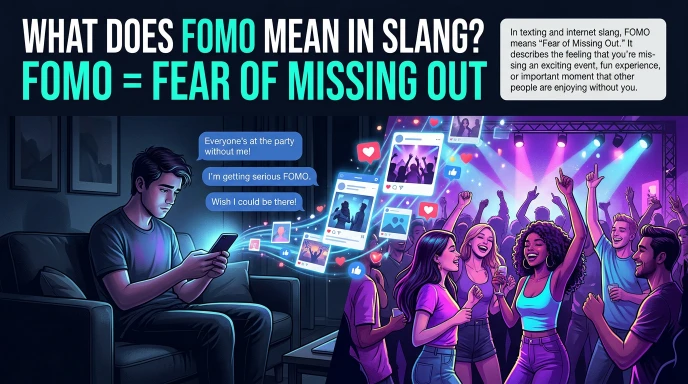
FOMO in slang means “Fear of Missing Out.” It describes the feeling of anxiety, excitement, or worry that you are missing something fun, important, or interesting while other people are enjoying it.
People commonly use FOMO in text messages, TikTok comments, Instagram posts, Snapchat conversations, and everyday online chats.
For example, if your friends go to a party without you and you see their pictures on Instagram, you might experience FOMO. You may feel left out because everyone seems to be having fun without you.
FOMO is especially common on social media, where people constantly share vacations, parties, events, achievements, and exciting experiences. Seeing these updates can make others feel like they are missing out on something.
Quick Answer: What Does FOMO Mean?
FOMO stands for “Fear of Missing Out.”
It describes the feeling that other people are experiencing something exciting or enjoyable without you.
- Full form: Fear of Missing Out
- Meaning: Feeling left out or worried about missing an experience.
- Tone: Casual, emotional, and sometimes humorous.
- Common platforms: TikTok, Instagram, Snapchat, Facebook, Discord, and texting.
- Example: “Everyone is going to the concert, and I have serious FOMO.”
In simple words, FOMO means feeling like you are missing something everyone else is enjoying.
What Does FOMO Mean in Text?
In texting, FOMO means Fear of Missing Out. People use it when they feel left out, wish they could join an activity, or worry that something exciting is happening without them.
It is a popular abbreviation because it expresses a common feeling in just four letters.
For example:
Friend 1: “We’re all going to the beach tomorrow!”
Friend 2: “I wish I could come. I’m getting FOMO already.”
Here, the person feels disappointed because they cannot join the group.
More examples include:
- “Everyone is hanging out tonight. FOMO!”
- “I saw your vacation pictures, and now I have FOMO.”
- “Don’t tell me about the party. You’re giving me FOMO.”
- “I can’t miss this event. My FOMO is too strong.”
FOMO can describe both serious feelings and playful reactions. Someone might use it jokingly when friends are eating pizza without them, or more seriously when they feel excluded from an important social event.
The main idea is that you wish you were part of something you believe you are missing.
What Does FOMO Mean on TikTok?
On TikTok, FOMO refers to the feeling of missing out on exciting trends, experiences, events, or activities that other people are enjoying.
TikTok videos often show concerts, vacations, festivals, parties, popular restaurants, viral challenges, and lifestyle trends. Watching these videos can make viewers feel like everyone is having fun except them.
For example, someone might comment:
“This video is giving me major FOMO.”
This means the video makes them wish they could experience the same thing.
Other TikTok examples include:
- “Everyone went to the festival except me. FOMO!”
- “This trend is making me feel serious FOMO.”
- “I need to visit this place. The FOMO is real.”
- “Watching everyone’s summer vacation videos gives me FOMO.”
People also use FOMO humorously in TikTok captions and comments.
For example, if someone posts a video of a group of friends enjoying a memorable night out, viewers might write “FOMO is hitting hard.”
TikTok makes FOMO especially noticeable because users are constantly exposed to other people’s experiences. However, remember that social media usually shows selected highlights rather than someone’s entire life.
What Does FOMO Mean on Instagram?
On Instagram, FOMO describes the feeling of being left out when you see other people enjoying experiences you wish you could have.
Instagram Stories, Reels, and posts frequently show social gatherings, vacations, celebrations, shopping trips, and special events.
For example, imagine your friends post pictures from a birthday party you could not attend. You might reply:
“Looks amazing! I’m getting serious FOMO.”
This means you wish you had been there with them.
Here are more examples:
- “Your travel pictures are giving me FOMO.”
- “Everyone looks so happy. I wish I was there!”
- “Major FOMO after seeing these concert pictures.”
- “I need to join you guys next time. FOMO is real.”
People also use FOMO in Instagram captions to make their posts more relatable.
For example:
“The best night ever! Sorry to everyone who missed it. FOMO is real!”
In this context, the person is joking that people who did not attend might feel left out.
What Does FOMO Mean on Snapchat?
On Snapchat, FOMO means Fear of Missing Out when someone feels they are missing a fun activity or social experience.
Friends often use it in private messages and replies to Stories.
For example:
Friend 1: “We’re at the new restaurant. The food is amazing!”
Friend 2: “Stop! You’re giving me FOMO.”
The second person means they wish they could be there enjoying the food too.
Other examples include:
- “Why did everyone go out without me? FOMO.”
- “Your Snap looks so fun!”
- “I should have come with you guys.”
- “I’m getting FOMO from all these vacation Snaps.”
Snapchat makes it easy to see what friends are doing in real time. As a result, people may use FOMO when they notice that their friends are spending time together without them.
It does not necessarily mean someone is angry or upset. Sometimes, it is simply a playful way of saying, “I wish I were there.”
What Does FOMO Mean in Social Media?
Across social media, FOMO describes the pressure or worry of missing experiences that other people appear to be enjoying.
It can happen when someone sees:
- Friends attending parties or concerts.
- People traveling to exciting destinations.
- Influencers showing expensive lifestyles.
- Viral trends that everyone seems to be following.
- Group activities they were not invited to.
- Special events happening in their community.
For example, someone scrolling through Instagram might see several friends attending a music festival. Even if they were not interested in going before, seeing everyone’s pictures might suddenly make them wish they had bought a ticket.
That feeling is FOMO.
The abbreviation is also used in discussions about social media habits, online pressure, and comparisons between people’s lifestyles.
FOMO is not limited to missing parties or social gatherings. It can also describe the feeling of missing opportunities, experiences, or trends.
What Are Some Examples of FOMO in Everyday Conversations?
FOMO is easy to use in casual conversations. You can use it when you wish you were somewhere, wanted to participate in an activity, or felt left out after seeing other people’s experiences.
Here are some natural examples:
| Conversation | Meaning |
| “Everyone is going to the concert. FOMO!” | I wish I could attend too. |
| “Your vacation pictures are giving me FOMO.” | I wish I were on that vacation. |
| “I have serious FOMO about this party.” | I feel like I’m missing a fun event. |
| “The whole group went out without me. FOMO is real.” | I feel left out. |
| “I can’t miss this opportunity.” | I don’t want to experience FOMO. |
| “Stop posting that delicious food. You’re giving me FOMO.” | I wish I could eat that food too. |
| “Everyone is watching this show except me.” | I feel like I’m missing something popular. |
These examples show how FOMO works in everyday communication.
You can use it as a standalone reaction or include it in a complete sentence.
What Is the Difference Between FOMO and JOMO?
FOMO and JOMO describe almost opposite feelings.
It means Fear of Missing Out, while JOMO means Joy of Missing Out.
FOMO happens when you feel worried or disappointed because you are not participating in something other people are enjoying.
JOMO describes the happiness or relief of choosing not to participate.
Here is a simple comparison:
| FOMO | JOMO |
| Fear of Missing Out | Joy of Missing Out |
| Feeling left out | Feeling content staying away |
| Worrying about other people’s experiences | Enjoying your own time |
| Wanting to join an activity | Being happy to skip an activity |
| Often connected with social pressure | Often connected with personal choice |
FOMO example:
“Everyone is going out tonight, and I feel like I’m missing all the fun.”
JOMO example:
“Everyone is going out tonight, but I’m happy staying home and relaxing.”
In simple terms, FOMO makes you wish you were somewhere else, while JOMO helps you enjoy where you are.
Why Do People Experience FOMO?
People experience FOMO for different reasons. It often happens when they compare their lives with what other people are doing.
Here are some common reasons:
1. Social Media Comparisons
Seeing pictures and videos of other people’s exciting experiences can make someone feel that their own life is less interesting.
For example, watching friends travel, attend concerts, or enjoy parties may create a feeling of missing out.
2. Fear of Being Left Out
People naturally want to feel included in their social groups. When friends make plans without them, they may worry that they are being excluded.
3. Popular Trends
When a trend becomes popular, people may feel pressure to participate so they do not miss something everyone is talking about.
For example, a viral challenge or popular event might create FOMO among people who have not joined.
4. Limited Opportunities
Sometimes, FOMO happens because an opportunity may not come again.
For example, if your favorite singer is performing nearby for one night only, you might feel worried about missing the concert.
5. Constant Online Updates
Social media makes it easy to see what other people are doing throughout the day. Constant updates can make someone feel like they should always be participating in something exciting.
FOMO often comes from comparing your own everyday experiences with the exciting moments other people choose to share.
Is FOMO a Negative Feeling?
FOMO can be a negative feeling because it may create anxiety, pressure, jealousy, or dissatisfaction. However, experiencing it occasionally is normal.
For example, you might feel disappointed when your friends attend an event you wanted to join. That does not necessarily mean anything is wrong.
The problem can arise when FOMO starts affecting your decisions or daily life.
Some possible effects include:
- Feeling unhappy after scrolling through social media.
- Spending money just to participate in popular activities.
- Agreeing to plans even when you do not want to go.
- Constantly checking what other people are doing.
- Feeling left out when friends spend time together.
- Comparing your life with other people’s online posts.
It can help to remember that you do not need to participate in everything to enjoy your life. Taking breaks from social media and focusing on your own interests can make the feeling easier to manage.
Is FOMO an Acronym or Slang Word?
FOMO is an acronym that is widely used as an informal slang expression.
It stands for Fear of Missing Out. Unlike many internet abbreviations that are mainly used in text messages, FOMO is also commonly spoken in everyday conversations.
For example, someone might say:
“I’m going to the party because I don’t want to have FOMO.”
People also use it in articles, social media discussions, advertisements, and conversations about lifestyle choices.
Although FOMO is informal in tone, it is widely understood outside internet slang communities too.
FAQs About FOMO Meaning in Slang
What does FOMO stand for?
FOMO stands for Fear of Missing Out. It describes the feeling that you are missing an exciting or important experience while other people are enjoying it.
What does FOMO mean in texting?
In texting, FOMO means Fear of Missing Out. People use it when they wish they could join an activity or feel left out of something happening.
What does FOMO mean on TikTok?
On TikTok, FOMO describes the feeling of missing out on viral trends, exciting events, vacations, or experiences shown in videos.
What does FOMO mean on Instagram?
On Instagram, FOMO refers to feeling left out after seeing other people enjoying activities or experiences. It is often used in comments, captions, and Stories.
What does FOMO mean on Snapchat?
On Snapchat, FOMO means Fear of Missing Out. Someone might use it after seeing friends’ Snaps from a party, vacation, or social gathering.
Is FOMO good or bad?
FOMO is usually an uncomfortable feeling because it can make people feel left out or dissatisfied. However, experiencing it occasionally is normal.
What is the opposite of FOMO?
JOMO (Joy of Missing Out) is commonly considered the opposite of FOMO. It describes feeling happy or relaxed about skipping activities and enjoying your own time.
Can FOMO be used in a sentence?
Yes. For example, “Everyone is going to the beach, and I’m getting serious FOMO.” This means you wish you could join them.
Is FOMO only used by Gen Z?
No. People of different age groups use FOMO in texting, social media, and everyday conversations. It is widely understood across online communities.
Is FOMO a real word?
Yes. FOMO is a widely recognized acronym that has become part of everyday language. It is used in casual conversations and discussions about social behavior.
Conclusion: What Does FOMO Mean in Slang?
FOMO means “Fear of Missing Out,” a feeling of worry or disappointment that you are missing something exciting while other people are enjoying it. It is commonly used in texting, TikTok, Instagram, Snapchat, and everyday conversations.
For example, seeing your friends at a party without you might give you FOMO because you wish you could be there too.
Remember, FOMO is about feeling left out or missing an experience, while its opposite, JOMO, means enjoying the things you choose not to participate in.
Discover More Articles:

I research internet slang, texting abbreviations, and online language to create clear, accurate, and easy-to-understand content. My goal is to make modern internet language simple by publishing well-researched, regularly updated explanations based on trusted sources.